Where Unified Commerce Suite Fits in Shopify B2B Solutions
Enterprise eCommerce stacks are rarely built all at once. Most are assembled over time, with different systems responsible for different parts of the business.
In a typical Shopify B2B environment, Shopify powers the storefront and checkout, ERPs manage financials, inventory, and fulfillment, and middleware connects systems that were never designed to work together natively. Unified Commerce Suite was developed specifically to address the gaps in B2B systems.
Even with middleware systems in place, a critical layer of business logic still needs to be addressed. This includes advanced B2B pricing models, custom checkout requirements, and catalog structures that vary by customer, company, or location.
These are not edge cases. Customer-specific pricing models and catalogs are standard requirements for companies running complex B2B commerce operations on Shopify.
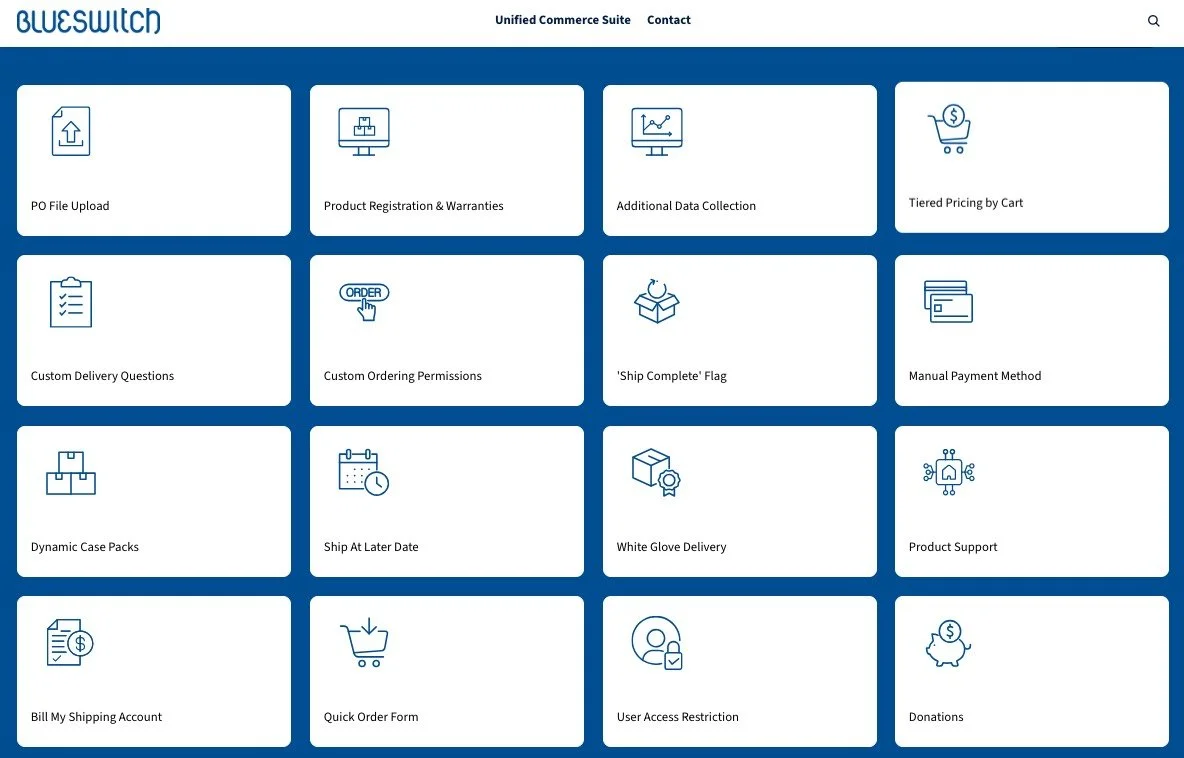
Shopify B2B Often Relies on Custom Development
Most Shopify B2B solutions extend beyond native functionality.
Teams commonly rely on custom Shopify development, checkout extensions, and purpose-built apps to support requirements like dynamic pricing, structured ordering workflows, and additional data collection at checkout.
Using apps and extensions to power your business is effective, but it introduces a recurring challenge. Each new implementation is treated as a net-new build, even when the underlying requirement is common across Shopify B2B environments.
Over time, this web of apps and extensions becomes a confusing warren of competing functions, leading to longer development timelines, inconsistent implementations, and increased maintenance overhead. If a single app or extension fails, it has a cascading effect that can break the whole system and bring your business to a grinding halt.
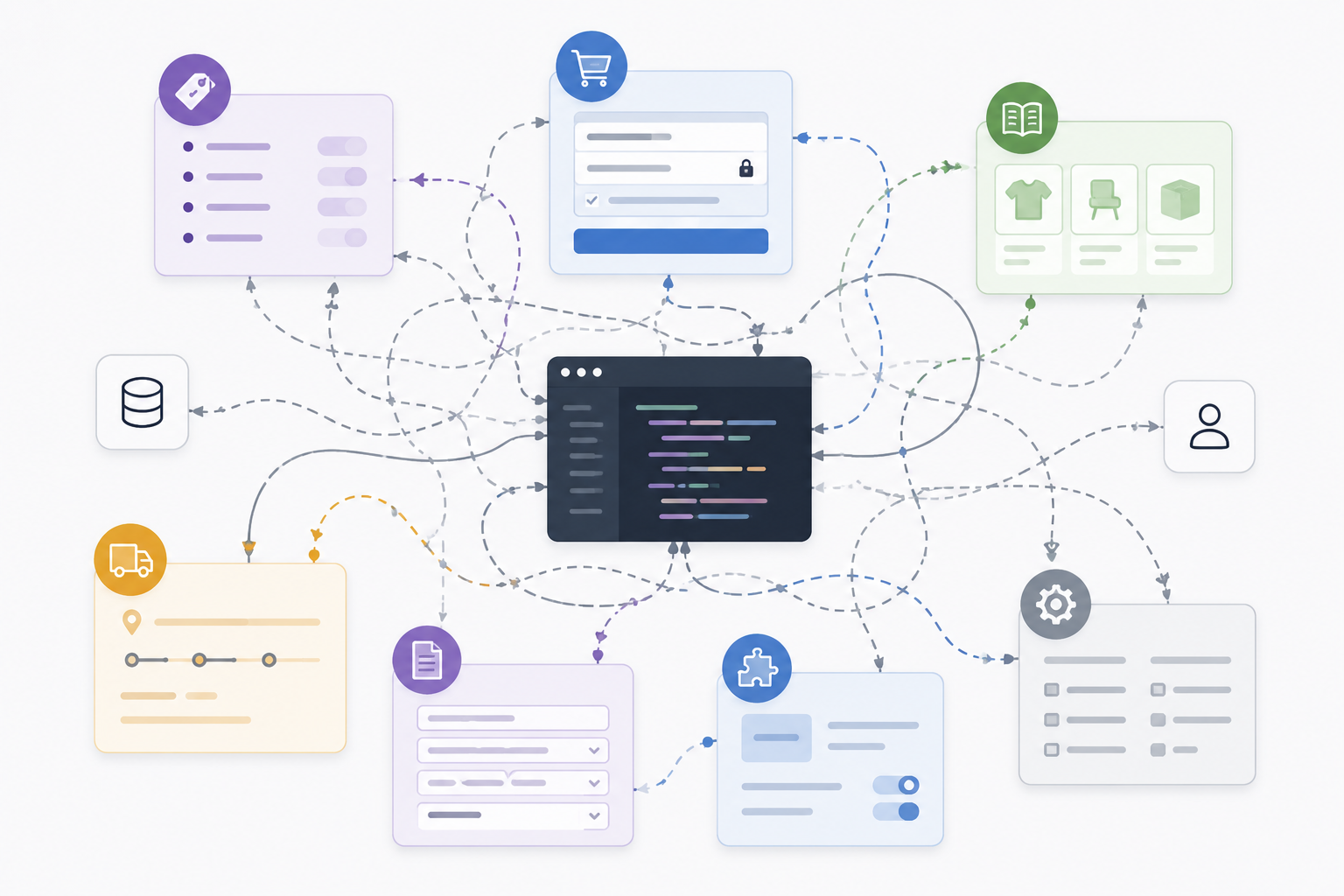
Every business is different, but certain platform limitations repeat again and again
A Structured Approach to Shopify Custom Development
BlueSwitch’s Unified Commerce Suite is designed to make Shopify custom development more efficient without removing flexibility.
Instead of rebuilding custom Shopify B2B functionality from scratch, Unified Commerce Suite organizes common patterns into structured, repeatable modules. These modules can be implemented, adapted, and extended within Shopify based on the needs of each business.
But rather than building a suite of Shopify apps that require constant updates in order to function properly, we built Unified Commerce Suite to be a framework of code-based solutions that are hardwired into the Shopify backend. This approach delivers the benefits of custom Shopify development while reducing the amount of foundational work required to deliver it.
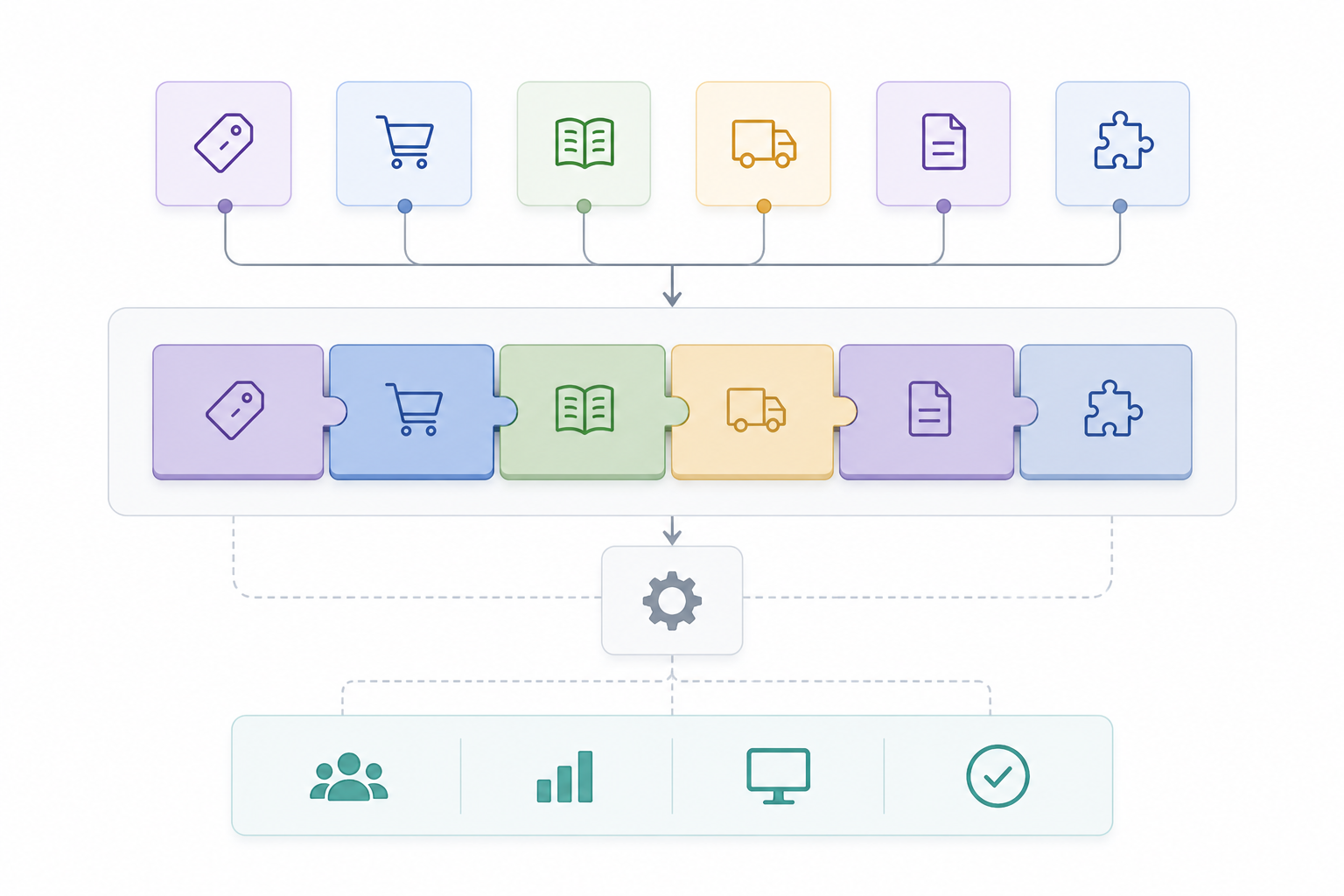
Structured building blocks, seamlessly integrated into your Shopify B2B build
Common Shopify B2B Functionality, Delivered More Efficiently
The modules within Unified Commerce Suite focus on the areas where Shopify B2B merchants most often need additional functionality:
Pricing logic that responds to cart composition
Checkout flows that capture required operational data
Catalog visibility that adjusts based on customer attributes or permissions
Structured surcharges
Payment and delivery requirements
Fulfillment constraints that must be accounted for before an order is placed
Each Unified Commerce Suite module represents a common extension point within Shopify B2B ecommerce. The difference is not in the functionality, but in how quickly and efficiently it can be delivered.
Why Shopify B2B Solutions Need to Work Together
Most Shopify B2B implementations require multiple layers of customization.
When pricing, checkout, and catalog logic are developed separately, inconsistencies begin to emerge. Pricing rules may not align with checkout behavior. Catalog visibility may not reflect fulfillment constraints. These gaps can create friction for both customers and internal teams.
By structuring these capabilities as a unified set of Shopify B2B modules, Unified Commerce Suite ensures that these systems work together as a stable, seamless, consistent business environment.
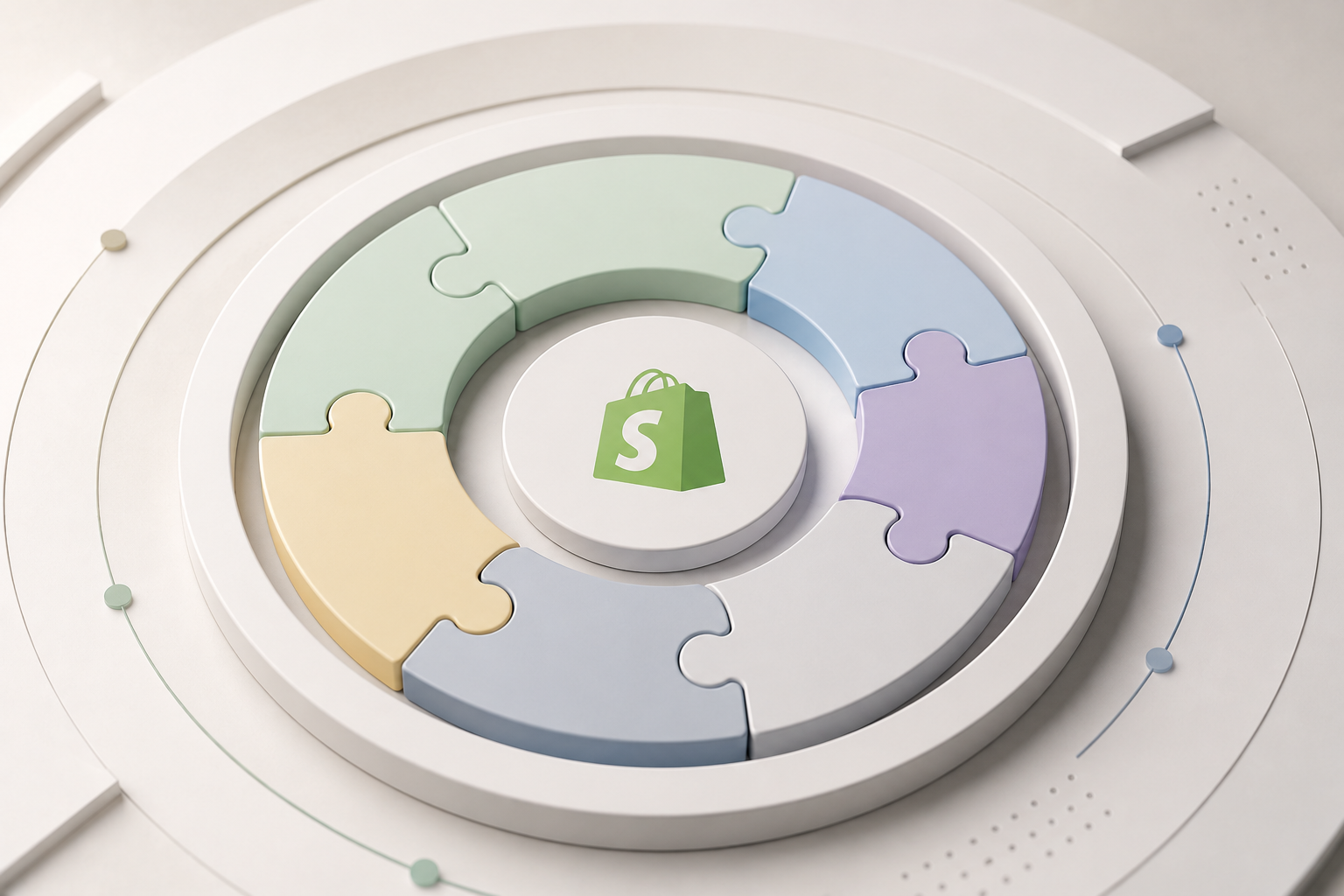
Unified Commerce Suite is designed to fit seamlessly into the Shopify platform, not sit alongside it.
Built Within Shopify, Not as a Separate System
Unified Commerce Suite does not replace Shopify or introduce a new platform.
All functionality is built using Shopify’s API, extensions, and existing architecture. This integrated approach not only ensures compatibility with Shopify Plus, but also allows for deeper customization where needed.
For teams evaluating Shopify B2B solutions, this approach maintains alignment with the Shopify platform while expanding functionality to meet the needs of your business.
Unified Commerce Suite: A More Efficient Way to Deliver Shopify B2B Solutions
Unified Commerce Suite represents a more structured approach to Shopify B2B development.
By organizing the most-requested B2B features into reusable modules, we’re able to reduce redundancy, accelerate delivery timelines, and improve consistency across B2B implementations. For businesses running complex B2B commerce operations on Shopify, Unified Commerce Suite delivers a reliable, scalable path to extended functionality.
Unified Commerce Suite is built to support the way Shopify B2B solutions are already being developed, with more structure, more consistency, faster time-to-live, and less rework.
If you’re evaluating how to extend Shopify to better support complex pricing, ordering, and operational requirements, we invite you to explore the BlueSwitch Unified Commerce Suite.